
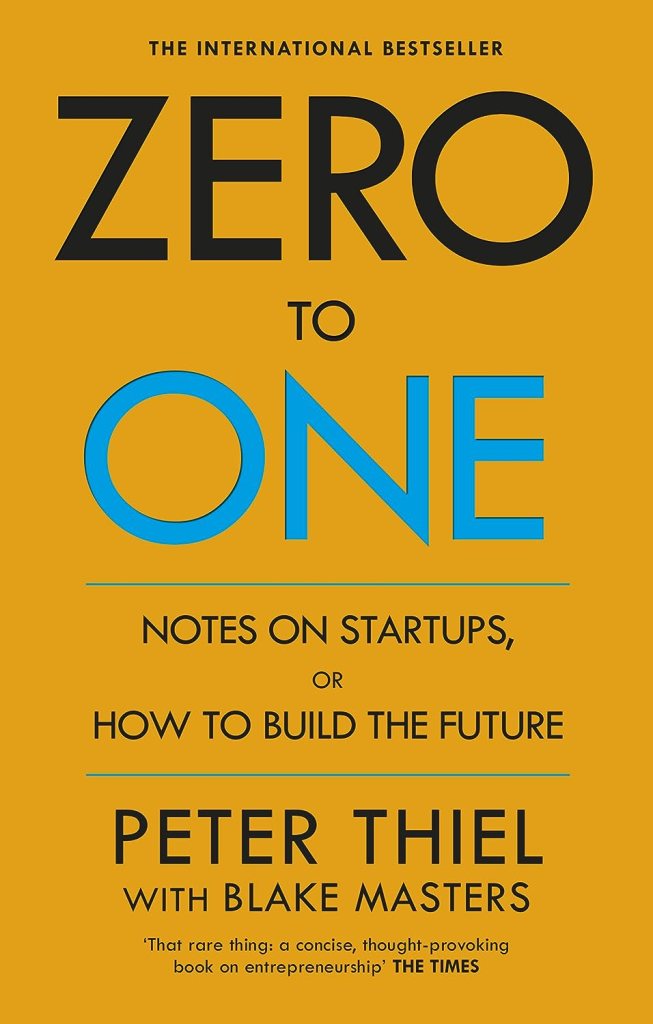
Zero to One: Notes on Startups, or How to Build the Future
by Peter Thiel (with Blake Masters)
Virgin (1 June 2015)
What’s It About?: Startups, at least as the word is currently defined in the Silicon Valley sense, and how to test ideas and get your company moving. It challenges readers to look past conventional thinking and create something new, something that will create value and make the world a better place.
My opinion: I should start by making it clear that I am not an entrepreneur, so I can’t promise anything insightful in this book summary. I’m just someone who thinks about leadership and what it means to work effectively in an organisation in a general sense, which is why these business books appeal to me.
Peter Thiel co-founded PayPal and was one of the first people to invest in Facebook. I’ve been interested in learning about the guy and how he thinks since I read Conspiracy, by Ryan Holiday. Plus, Thiel knows what it means to innovate, shake things up, and take a startup from the idea stage to full-fledged company.
What really struck a chord with me was Thiel’s notion that “competition is for losers.” Normally, in polite society, competition is fair for maintaining a fair market dynamic. And there are plenty of examples of a company being the first to market an idea, only to be subsumed beneath a sea of competitors. This is a product of what is known as the “network effect,” or the idea that “one more” improves the whole. The entire MBA edifice is built on achieving network effects at all times. When you have all these hands chasing network effects, you can start to see what Thiel means when he says competition is for losers. Instead, he proposes the following: Find an untapped market, and exploit it as much as you can before anyone else can get their foot in the door, as opposed to some knockdown drag-out struggle against a competitor(s). But not all unique ideas are created equal — putting yours out there and succeeding is the kind of endeavour that requires time, resources, and insight to execute effectively. If you have all of that, more strength to you.
Thiel’s advice is… understandably polarising. “Don’t disrupt,” and “monopolies are good” will definitely stop a lot of readers in my tracks, as they did with me. But then I started thinking more about Thiel’s anti-competition stance and how it might apply to me. The more I focus on my peers at work, the less I put into self-development and being the best kind of teacher I can be. So, I would suggest taking these ideas as things to think about, rather than gospel truth.
That said, I’m glad I’m not a startup founder in the trenches, because I can see a book like this being distracting at best, confusing and ultimately counterproductive at worst. It’s good for someone like me — the non-insider trying to get a grasp on business theory, or looking to learn a bit more about strategy and leadership once you’re in a management role (or, someone interested in the mind of Thiel).
A good book, but I don’t see it being essential for anyone going places or looking to change the world.
 Lawrence Deveney