
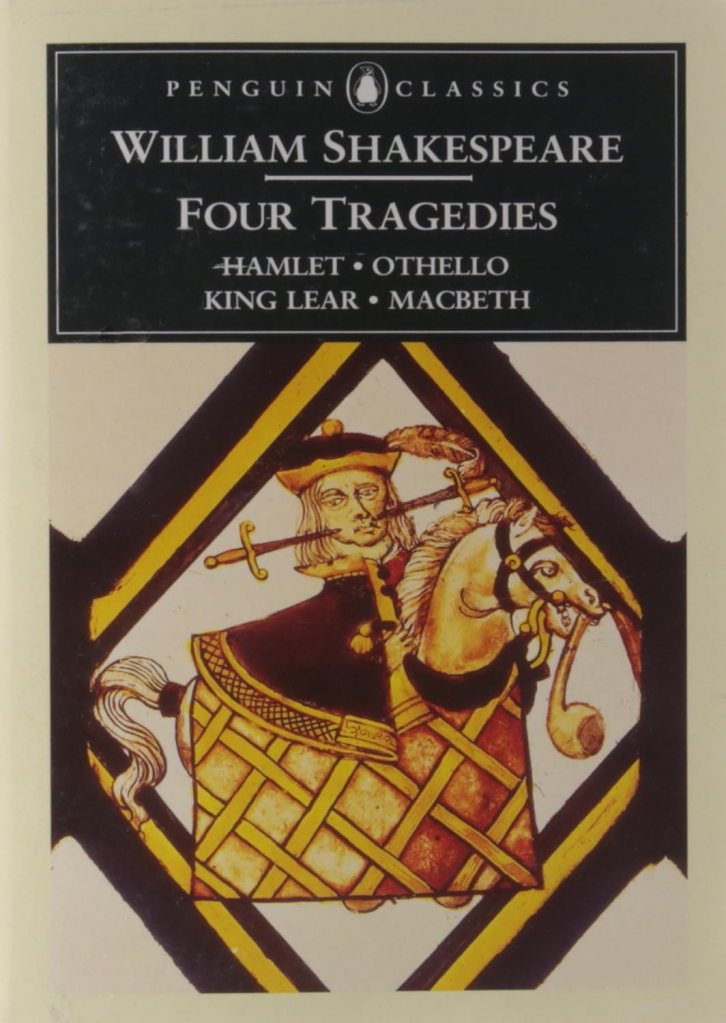
Four Tragedies: Hamlet, Othello, King Lear, Macbeth
by William Shakespeare
Penguin (27 October 1994)
What’s it about?: Four of Shakespeare’s tragedies, with notes, introductions, background and sources, and other additional materials to accompany each text.
My opinion: It’s Shakespeare. How can one go wrong? Let’s just leave it at that.
Kidding… sort of. I feel like anything I have to say about the Bard will take away from the pleasure of reading him, but I’m going to try anyway.
One thing I love in fiction is the story of a hero fighting against an evil or injustice, only to become the very thing they’re opposing. These Shakespeare tragedies certainly depict the downfalls of great men due to some flaw in their character. Together, these texts really provide a bird’s eye view into the human mind, and what can happen if one goes without checking themselves. And although modern clinical psychology can tell us a lot more, Shakespeare certainly knew how to observe others. Fear, paranoia, and an incredible capacity for self-deception wreak all kinds of havoc on the characters and those around them. And therein lies an important theme throughout Shakespeare’s works:
There are always unintended consequences.
In Hamlet, the young prince avenges his father until he is killed in turn. Othello’s jealousy and insecurity result in Desdemona feeling pressured into lying and acting out of character. King Lear’s division of his kingdom. Macbeth losing his identity. Unintended consequences.
Or, look at real world events of just the past few decades. The leaders of the so-called free world declare war on countries in the Middle East, several time zones away. Attempts are made at nation-building and spreading Western democracy. The unintended consequences are the deaths and displacement of millions, provoking and encouraging existing conflicts, power vacuums, and overall radicalisation and emboldening of groups like the Taliban and ISIS.
These tragedies make for a great collection, and yet each play is so unique that they must be read slowly, one by one. This volume is definitely not something you can just breeze through, that’s for sure. Not just for the contents of each play, but notes and overall editing techniques vary wildly for each. It’s a lot at first glance, but great for somebody who enjoys the classics but needs a bit of help getting through them.
I only wish that Julius Caesar had been included in this collection. This comes back to the theme of unintended consequences. The senators assassinate the emperor, in the hopes of ending his dictatorship and restoring the Roman Republic. The unintended consequence is that their actions plunge Rome into years of civil war, culminating in the appointment of another tyrant. If it had been included, then this volume would feature my top five Shakespeare plays, but I guess you can’t have everything.
All the same, Four Tragedies is a nice volume to have in your library, whether you’re a longtime reader or new to the Bard. With the sheer intensity of these four plays, and the wealth of additional material for each, you can’t go wrong.
 Lawrence Deveney