
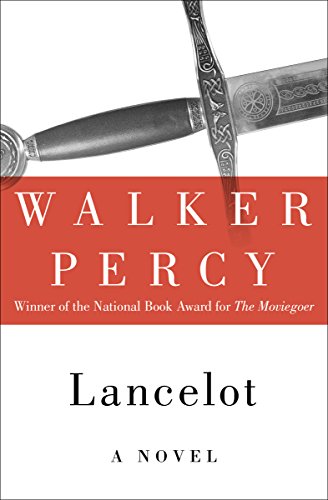
What’s it about?: Walker Percy‘s fourth novel. It is the story of a man — Lancelot Lamar — driven insane by the decadence of the world that is, to the point where he is institutionalised.
My opinion: A fascinating read. I was already a fan of The Moviegoer before I found Lancelot. However, I knew I had to bump Percy’s fourth novel up my list when it was used as an epigraph for Ryan Holiday’s Conspiracy:
“I couldn’t stand it. I still can’t stand it. I can’t stand the way things are. I cannot tolerate this age. What is more, I won’t. That was my discovery: that I don’t have to.”
I will be truthful: I am at a point in my life where I’m not reading a lot of fiction. At least not for pure enjoyment, anyway. When I pick up a novel, I want to learn something about the human condition and grow as a person. The best kind of fiction can make you think just as well as any work of non-fiction. This is not wishful thinking — entire studies have focused on connections between reading fiction and increased empathy. What makes Lancelot such a valuable work of literary fiction is its philosophical nature. You can hear Percy’s brain ticking, but the depth of his work is moderate enough that anyone can read him and stay on track. And though he rarely offers solutions, his writing is interesting enough to recommend.
Lancelot reads like the diary of a man whose ramblings are congruent with the state of his mental condition. Which is precisely what this story is. Lancelot has discovered his youngest daughter was the product of an affair between his wife and another man. Unable to process this realisation and the emotions in him, he snaps, murders his wife, and ends up in a psychiatric hospital. From there, the story is told through a series of monologues and reflections. As he talks to his priest friend about the meaninglessness of life and the failures of Christianity, the reader is left wondering what the father is telling him in response. Interesting technique, and one that works only when executed by an author such as Percy.
In the end, who is right? Lancelot, or the supposed antagonists (i.e. the world)? It seems nobody is, and the former is definitely not a white knight of love and romance, but of revenge and bitterness. Percy’s novels do have that “the modern world is messed up” thing going, but you’d be hard-pressed to find anyone who genuinely believes that sexual violence is the key to righting society’s ills, that’s for sure. Like the narrators of Fight Club or American Psycho, the author may just be warning the reader against coming to the same conclusions.
It reminds me of that Nietzsche statement, “God is dead.” Not necessarily atheism in and of itself, but a society undergoing a massive cultural shift where salvation via religion simply isn’t the dominant source of morality. “God remains dead. And we have killed him.” But how have we done it? And what are we putting in its place? It doesn’t mean a whole lot to me personally, but for someone who has grown up living a life of faith, it can be very humbling and frightening, as it was with Lancelot.
Despite the discomforting subject matter of the novel, I would still recommend it.
 Lawrence Deveney