
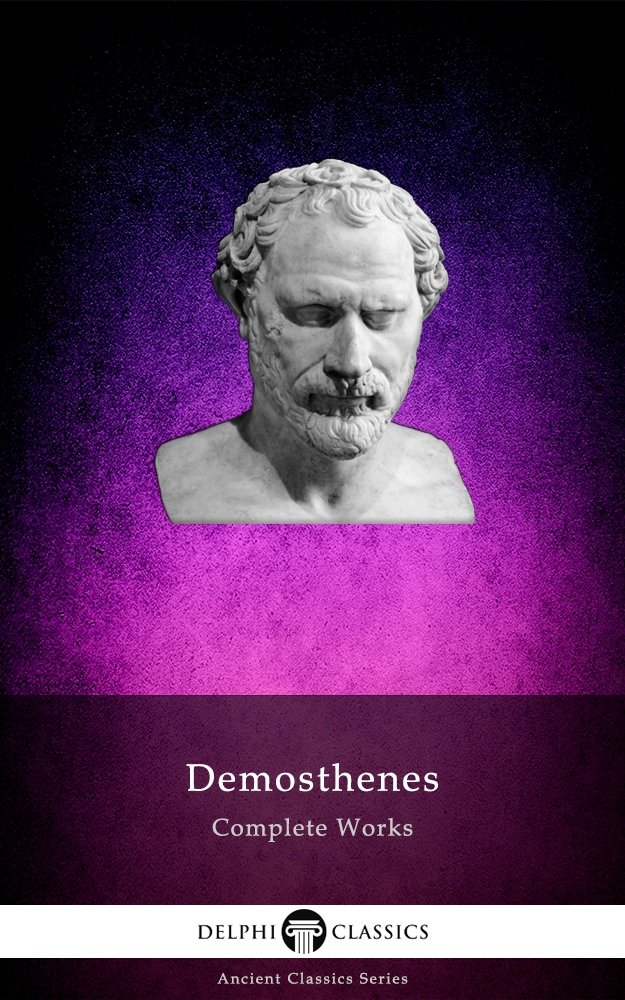
What’s it about?: A collection of the works of Athenian statesman Demosthenes, who is recognised as one of the greatest orators of Ancient Greece. This volume is complete with illustrations, introductions, and bonus material including the Roman biographer Plutarch‘s account.
My opinion: For the longest time, I stayed away from Kindle. I prefer a physical library of books, for a number of reasons. The books are actually in the room, they have a kind of atmosphere about them, and it’s easier for me to mark pages and take notes the way I prefer. And while I have purchased ebooks before this, I never find myself coming back to flip through them. Just generally, unless there is no other way to get a text, or if I need a source at a precise moment, I find them counterproductive to my interests. That, and I don’t read Dan Brown novels. But then, there are exceptions I am happy to make. Having all the works of Demosthenes compiled into one ebook for a few bucks? Sure thing.
In one very famous speech, “On the Liberty of the Rhodians,” Demosthenes calls out his fellow statesmen for their flattery and self-congratulatory rhetoric. He said, “Reflect that your ancestors set up those trophies, not that you may gaze at them in wonder but that you may also imitate the virtues of the men who set them up.” The things we achieve are good, no question about that. However, to use one’s achievements as a selling point — to focus on how impressive our achievements were, rather than the merits of our actions in those achievements — in the present ends up being counterproductive. And if it becomes your criterion for decision-making, personally or professionally, you probably won’t get far. A better way to do this would be something like, “This is what I’ve accomplished, now let’s see what you can do!” Because that’s proactive and inspiring.
And then you have all the bells and whistles: the illustrations pertaining to his life and works, introductions to his orations, and some translations that originally appeared in the Loeb Classical Library, the bonus biographies by Plutarch, and just the ordering of the texts by chronology and genre, all of these things are great to have. Also, having this English translation alongside the original Greek is cool; I love it when books have that.
One issue: This volume of “complete works” does not include Demosthenes’ prologues or introductions. There were fifty-six passages bearing the collective title “prooimia,” but here they are not to be found. Maybe Delphi didn’t think they counted, though my imagination fails me as to how. For a complete volume, it would make sense to include them.
Still, I’m glad this volume exists. Some awesome works by an incredible statesman, in one convenient format. Even if it’s not a physical book.
 Lawrence Deveney