
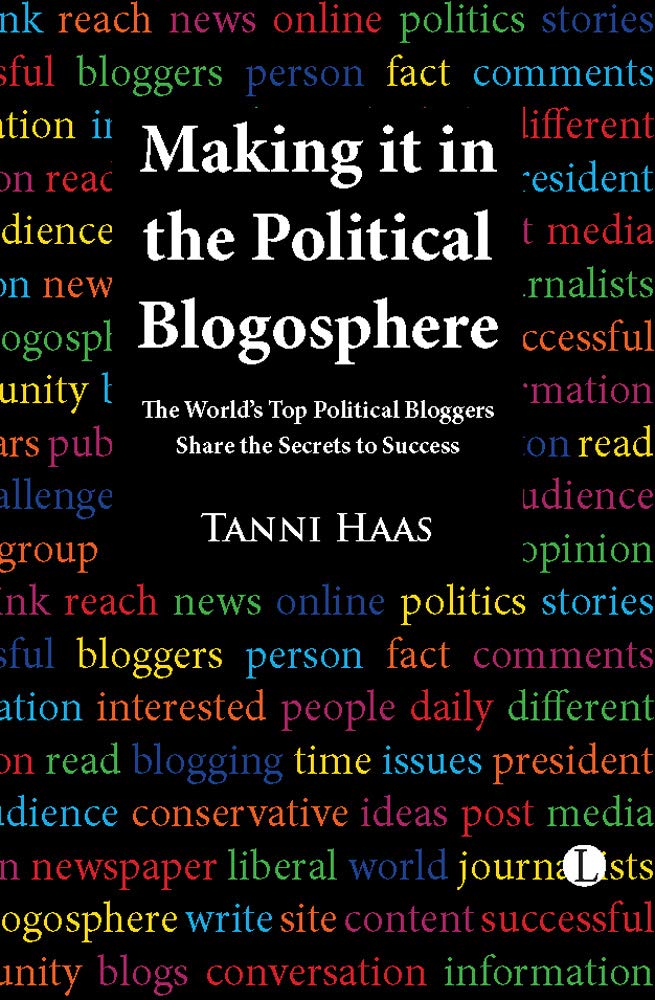
Making It in the Political Blogosphere: The World’s Top Political Bloggers Share the Secrets to Success
by Tanni Haas
Lutterworth Press (8 November 2011)
Making It in the Political Blogosphere is a simple, concise introduction to blogging as a political practice, and what motivates political bloggers. Tanni Haas focused on twenty high-profile figures in the field, including the founders of sites like Daily Kos, Instapundit, Crooks and Liars, and others.
For the record, I absolutely loathe the term “blogosphere,” and I try my best to avoid using it if possible. But if use it I must, then use it I shall. Here goes.
One common thread between these bloggers is motivation. They started out blogging for personal reasons, on issues that mattered to them, that the mainstream media either weren’t covering, or just glossed over. The 9/11 attacks, and the lead-up to the Iraq War are two major examples.
These sites were founded in the 1990s and 2000s, when the current crop of social media platforms were in their infancy. If you wanted to gain any sort of following, you really had to bootstrap your site. Algorithms weren’t quite what they are now. The bloggers examined in this text built their audiences from the ground up through frequent updates, having a strong, unique, and recognisable voice, and a relentless practice of networking, of linking and commenting on other blogs.
Why do any of this? Because blogging is/was a tool for ordinary people to have their voices heard, and to hold politicians and mainstream journalists accountable. It also allowed writers to bypass the gatekeepers of the day, and just get their work out there. And while it may have started out as a glorified hobby, for these high-profile bloggers, news-blogging became a full-time job. This became something of a double-edged sword, with monetisation through ads, book deals, speaking gigs, and affiliations with political organisations leaving a bad taste in the mouths of longtime readers. But at the same time, these conditions can allow a news blog to grow, and otherwise reach people who might not have heard of them.
All of this might seem quaint now, but this was before the YouTube revolution hit its crescendo, when the written word was still dominant.
Haas presents all of this in a style that is easily readable and accessible to the non-insider. He really lets the bloggers interviewed speak for themselves, and I didn’t get any sense of editorialising or dumbing down what was said. The end result is a series of case studies that shine a light on the approaches taken to political blogging, and how these bloggers have defined success. Worth a look.
 Lawrence Deveney