
“Consider the lives led once by others, long ago, the lives to be led by others after you, the lives led even now, in foreign lands. How many people don’t even know your name. How many will soon have forgotten it. How many offer you praise now — and tomorrow, perhaps, contempt.”
-Marcus Aurelius
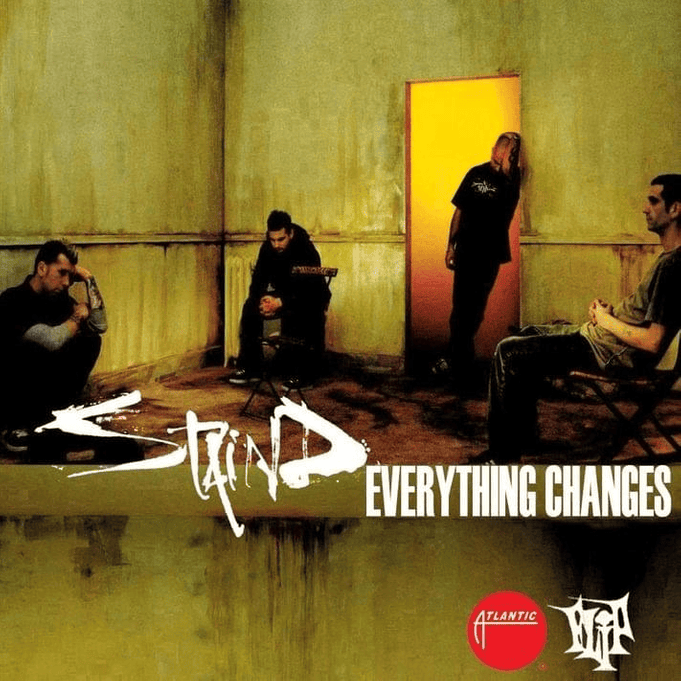
In August of 2005, Staind released Chapter V via Atlantic Records. It debuted at number one on the Billboard 200 — driven by the singles “Right Here” and “Falling” — while many of their peers in the nu-metal scene were in commercial decline. The band began 2006 with the album’s third single, “Everything Changes.” It was one track that was written and recorded towards the end of the Chapter V sessions.
“I was messing around and we pushed ‘record’ on something,” frontman Aaron Lewis said of the track, in an interview wth MTV News. “I threw out four or five ideas and that was one of them. It really just all fell together pretty quickly.”
“Everything Changes” is right in Staind’s wheelhouse. Lewis focuses on a relationship that began as one thing, and then became something else. Regret, healing, and introspection, but also a desire to “turn back the years” and right various wrongs. The themes of a strained relationship, regret, and a loss of connection. Lewis is vulnerable, apologetic, and intimate — he is not afraid to explore himself and dig deep in his lyrics. And then, some sign of hope. That he might be able to repair the relationship, or if not that, just work on himself.
How to deal with change is something that frequently comes up in Stoic texts. And so many other schools of philosophy.
“Frightened of change?” Marcus Aurelius would question in his Meditations. “But what can exist without it? What’s closer to nature’s heart? … Can any vital process take place without something being changed? Can’t you see? It’s just the same with you — and just as vital.”
“If someone is able to show me that what I think or do is not right, I will happily change, for I seek the truth, by which no one was ever truly harmed,” Epictetus once said. “It is the person who continues in his self-deception and ignorance who is harmed.”
It was an infamous shipwreck and loss of fortune that led Zeno to found the school of Stoicism.
Staind have always drawn from personal experience with their music. Like so many in the nu-metal scene, Lewis doesn’t have much in the way of hidden meanings in his lyrics. He’s the type of guy who wears his heart on his sleeve, for better or worse. In this track, he could be addressing his wife, Vanessa. They married in 2002, when Staind really made it big. Three consecutive number one albums isn’t something the average band gets to experience. When an artist gets to that level, the job is no longer a nine-to-five gig but rather a twenty-four-seven.
“A lot of other people made a shitload of money but we’re the same as any of you,” Lewis reflected in a 2011 interview with Loudwire. “I have to work to pay my bills.”
And of course, the accompanying music video, which was much lighter than the track’s mood and lyrics.
“It’s the last day of high school,” guitarist Mike Mushok said to MTV News, of the video’s cataloguing of various fights and hookups. “That’s pretty much a huge changing point in most people’s lives, when you graduate high school and you actually go off into the real world. And we’re the band playing the high school party.”
Heraclitus once said, “Nothing is permanent except change.”
Everything changes, yes. But personally, I don’t relate to that longing to turn back the years, as Lewis puts it. Sure, patterns and stability are comforting, so naturally people prefer them. Constant flux may throw you off, but seasons do come and go, and sometimes the change can come as a pleasant surprise. There’s always that hope too.
 Lawrence Deveney