
“Modernity: we created youth without heroism, age without wisdom, and life without grandeur.”
-Nassim Taleb
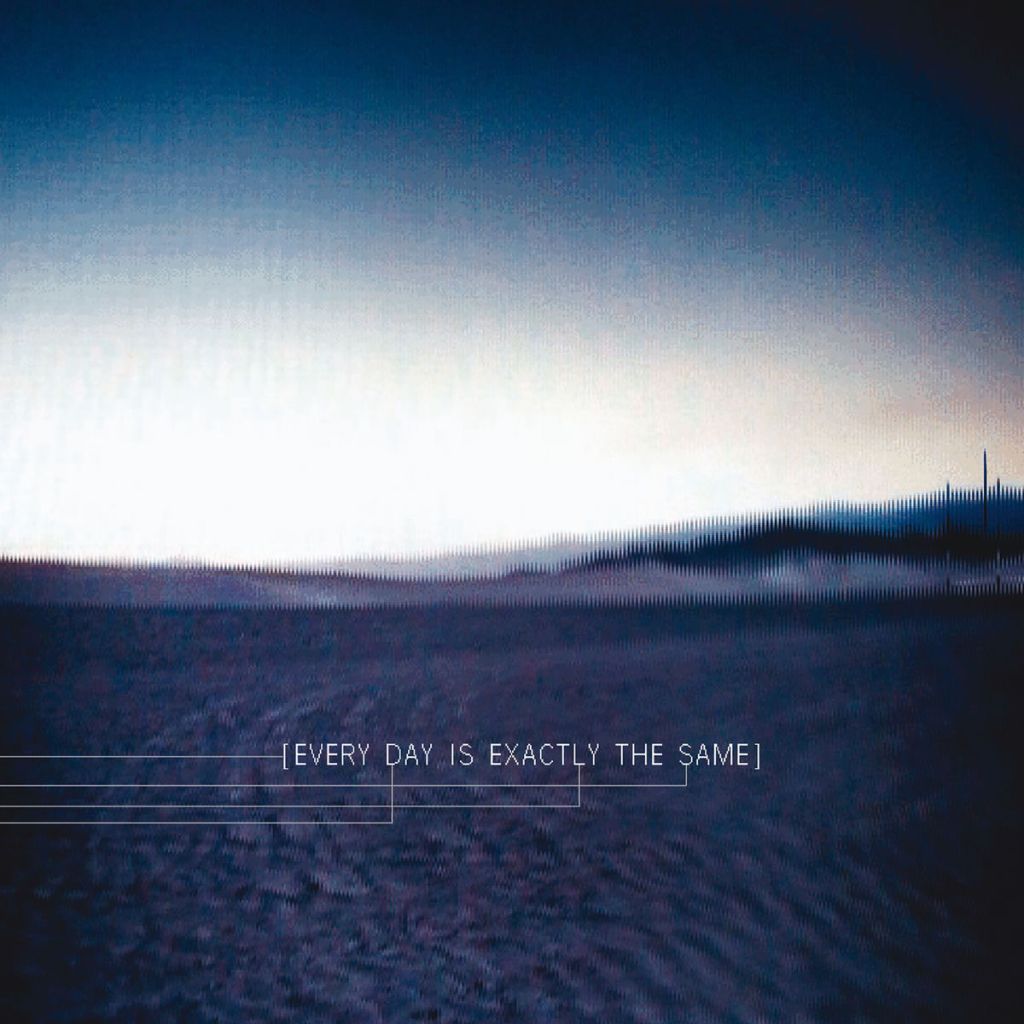
One of my favourite Nine Inch Nails songs ever is “Every Day Is Exactly the Same.” Released on 4 April 2006, it was the third and final single from With Teeth.
It peaked at number one in the Billboard Modern Rock Tracks chart, and number twelve in the Mainstream Rock Tracks chart. It also topped the Canadian singles chart. But what truly stands out about this single is that it wasn’t just a promo released to radio — we actually got a full-fledged EP with different remixes, not only of the title track, but of “The Hand That Feeds” and “Only” as well. While the concept of the remix wasn’t some new thing back in the 2000s, it wasn’t every day that an artist would commit to it so fully. Back then, only a chosen few excelled with the formula, like Linkin Park did, selling over a million copies of Reanimation.
There’s a lot to like about this song. I like the single’s cover artwork. I like the idea for the music video that never came to fruition. I like the lyrics about repetition and burnout; it’s like Jack’s complaints about everything being “a copy of a copy” in Fight Club. I like the spoken word section and the bridge leading into the final chorus. I even like that it’s a little mellower than previous Nine Inch Nails hits. Not everything has to be “Mr. Self Destruct” or “March of the Pigs,” great as those tracks are.
In terms of media presence, it’s also one of those songs that’s appeared in a whole bunch of TV shows. Wanted, Hawaii Five-0, Criminal Minds, and most recently on Amazon’s series Invincible, have featured the track. That’s one of the things that can help solidify a song’s legacy — its use in the media.
I have mixed feelings about it. On one hand, it’s great to see newer generations discovering this music. And if that’s through a new show or video game, fine.
But on the other hand, it feels like it gets to a point where the song becomes associated with that media more than something to be enjoyed in itself. Invincible especially. I’ve tried to enjoy that show, because I actually want to support superhero content that’s not Marvel or DC. But every episode stops dead in its tracks and devotes four minutes to some indie/alternative song the director thinks is cool.
The needle-drop montage, or that whole thing of “pause the episode and let a play song over a montage” isn’t exclusive to the Amazon series, but they do lean into it quite a bit. Back in the day, shows like The O.C. would use songs as a way of punctuating certain scenes, plus it helped promote a bunch of bands who go on to gain massive commercial success. That’s kind of what that show was. Entourage featured all kinds of songs during the ending credits of each episode. They usually had to do with the ideas and themes, not getting in the way of the narrative structure. In Guardians of the Galaxy, the protagonist keeps a Sony walkman with a tape of songs from the eighties, because the songs remind him of his life on Earth, and signpost the story for the viewer.
Maybe it’s cross promotion, since a small number of parent companies own the major TV networks and record labels. What better way to promote a hit single than through a show that has millions of viewers? Maybe directors really like doing it. It becomes fuel for nostalgia, for setting the mood, or serving as emotional cues without having the characters verbalise every feeling (the stilted animation of Invincible doesn’t lend itself to facial expressions and body language very well).
I think it’s a bit overdone. It does little or nothing to advance the story. If anything, it kills the narrative’s momentum, and serves no purpose than for the director to say, “Look how cool my taste in music is.”
And since Nine Inch Nails are a legacy act, they’re a simple choice. “Every Day Is Exactly the Same” — with its lyrics pertaining to alienation, routine, and existential dread — is even simpler. So, in that light, I can see why it would see use in a lot of films and TV shows. I just find the needle-drop trope overly self-aware and formulaic. Low-hanging fruit, especially in a a time when shows on streaming sites are a lot looser in structure and pacing than they were in the pre-streaming era.
And that makes me feel burned out. The association of otherwise great music with the most generic streaming-slop that people consume. It shouldn’t bother me, but it does. Oh well, what can you do.

