
“Although the art world is frequently characterised as a classless scene where artists from lower-middle-class backgrounds drink champagne with high-priced hedge-fund managers, scholarly curators, fashion designers and other ‘creatives,’ you’d be mistaken if you thought the world was egalitarian or democratic. Art is about experimenting with ideas, but it is also about excellence and exclusion. In a society where everyone is looking for a little distinction, it’s an intoxicating combination.”
-Sarah Thornton
I never quite know where to start with this band, but here goes.
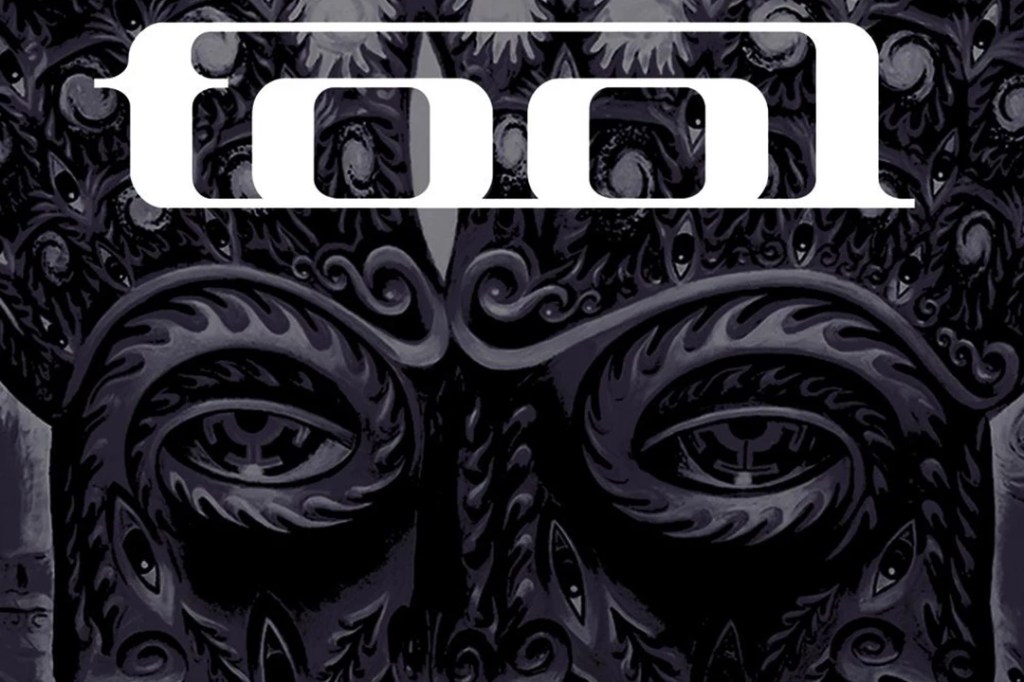
10,000 Days is Tool’s fourth studio album, released in April of 2006. It topped the album charts in the US and Australia, and reached high positions on the UK and Canadian charts. It was certified double-platinum in the US, for sales of over two million. As is the case with all of the band’s releases, the albums tracks showcased a range of mood and intensity, from heavy, complex arrangements, to more reflective, introspective pieces. It would also be their last studio release for over a decade, before the release of Fear Inoculum in 2019.
For the longest time, metal fans have either loved or hated Tool. Some love their modern take on modern metal, with their unique time signatures, the high gain guitar tone, and Maynard James Keenan’s unmistakable vocal stylings. More traditional metalheads were put off by the band’s progressive leanings, and Keenan taking the stage in drag or simply his underwear. Which may seem absurd now, but you have to remember how the world was in the 1990s to the mid-2000s. Hard rock and heavy metal were largely “boys clubs” back then, and anything other than bashing the mic against your forehead was a big no-no.
But then something strange happened. With 10,000 Days, Tool were suddenly loved by the mainstream, not just lanky dudes who were really into Dungeons and Dragons. There were actual females at their concerts! In part, this shift was due to the lead single, “Vicarious.” It quickly became one of the band’s most recognisable songs, with its complex time signatures anchored by drummer Danny Carey, and frontman Keenan’s lyrical themes of society consuming other people’s experiences through the media. Two further singles were issued — “The Pot,” a catchy number thanks to some stellar bass work from Justin Chancellor, and “Jambi,” known for some heavy guitar riffs from Adam Jones, and his use of a talk box effect.
And then the album’s deeper cuts. “Rosetta Stoned” is one of those tracks that really takes you somewhere. It’s a multi-section piece with shifting time signatures, and lyrics about a psychedelic experience. I’ve never really touched drugs, but even I was taken aback. I can only imagine how one would respond to it under the influence. “Wings for Marie” comes in two parts, with deeply personal lyrics on Keenan’s mother’s longterm illness. Themes of grief, transformation, and faith are strong here. The album title refers to twenty-seven years, or the total number of days Keenan’s mother lived partially paralysed after a stroke. This personal experience — combined with broader social critiques — gives the album an unusual balance between compassion and cynicism.
Between the longtime fans and the band’s explosion in the mainstream, there was a unique feeling. There is equal parts joy and annoyance in listening to a band for years, then being told “you need to check out” something you’d been recommending for years, over and over again after the fact. Like someone who watched HBO before Game of Thrones. Then again, I got into Tool by listening to Limp Bizkit and Korn. I wasn’t there in ’98, so I’m probably not much better.
Well, if you are one of those annoyed real fans, maybe you can reframe it as a certain satisfaction at getting in early. We all love to say we knew about a band early on, before they became cool, right? The success of 10,000 Days made Tool appreciation a nice piece of social capital that you could hold onto. If it means that much to you, then viewing it through that lens might make it less aggravating.
The phrase “cultural capital” comes to mind here. It is attributed to the French sociologist Pierre Bourdieu. He dives deep into it in his 1985 essay, “The Forms of Capital,” and later his 1996 book The State Nobility: Elite Schools in the Field of Power. People accumulate different forms of capital, not just money. There is social capital in the form of networks and connections. Cultural capital has to do with knowledge, taste, and cultural literacy. Understanding the symbolism in a classic painting, recognising allusions and references in literature, or being into obscure bands nobody has ever heard of but are somehow influential… you get the idea. Knowing something before others know it somehow makes you kind of a big deal. It’s a dick-measuring contest for guys who have no use for their dicks because they look and act like they’ve been face-fucked with a drum sander.
So, what happens to cultural capital when a band becomes mainstream? It changes. All of a sudden, millions of people know about your cool, obscure band. The barrier for entry is lifted, with radio singles and Spotify playlists. Your secret knowledge that made you cool is now common. Sociologists sometimes call this cultural dilution.
It can feel irritating when you tell people to check out a band, only to have it repeated back to you years later. From a cultural capital perspective, that frustration comes from status inversion. It used to be that you were the one introducing people to music. Now, people are acting as though they are introducing it to you. The symbolic economy becomes scrambled, and it all becomes an existential turning point. And it’s always repeating itself. It happened with Nirvana after Nevermind; Nine Inch Nails after The Downward Spiral; Radiohead after OK Computer; Korn after Follow the Leader.
One of the healthier ways to look at it is this: Cultural capital only has meaning inside communities. Mainstream success may dilute the fanbase, but the deeper forms of knowledge remain valuable to the hardcore fans who really care about the details. A casual listener might know “Vicarious.” A deeper fan might have a more detailed knowledge of the rhythmic structure of “Schism,” or the broader conceptual themes across Lateralus. That cultural capital doesn’t disappear. It just gets shifted around, deeper into the culture itself.
Sarah Thornton took Bourdieu’s idea of cultural capital and applied it to youth culture and local music scenes. Published in 1995, her book Club Cultures: Music, Media and Subcultural Capital is where her concept of “subcultural capital” is explored. Bourdieu looked at taste and knowledge in a broad sense, but Thornton laser-focuses on status within a specific scene. Underground music communities, club scenes, obscure genres and subgenres. It’s what music appreciation was for a lot of kids in my generation in the 2000s. We loved the idea of gatekeeping, and talking about wHaT iS ArT.
In the metal scene(s) in particular, there was always this question of who was real, and who was just passing through, or a tourist. As Thornton observed, status wasn’t about power or money, but credibility. You could be a broke nobody, but if you did it with good style and had good taste, you had status. And again, it’s that thing of knowing artists before they break, being able to name all the album deep cuts and B-sides, and not appearing too mainstream or commercial.
Real Tool fans were around for Undertow and Ænima, long before the band’s commercial upswing. Fans who came in around the time of Lateralus barely got a pass, but the longer you were a fan, the more credibility you had.
But if you came in around 2006 and could only name “Vicarious,” then you were a tourist, late, shallow, and just generally perceived as going where the winds were blowing. Which is more or less the same thing Bourdieu was getting at, just applied more specifically to music scenes (Bourdieu wrote about academic performance in schools, mostly). One of Thornton’s most interesting observations, to me, is that subcultures aren’t purely underground rebellions. If anything, they are shaped by media presence, industry structures, and distribution channels. Therefore, the idea of being underground or having deeper knowledge or an artist is a kind of fiction. Even that feeling when a band goes mainstream is kind of how it’s supposed to go. It’s a feature, not a bug.
Gen Z have no concept of this, I’ve noticed. If an artist blows up or goes mainstream, then good for them. Maybe that’s the right idea. And hopefully, as we’ve got older, millennials can stop giving a shit and just enjoy music for what it is. The Cold War ends, the Berlin Wall goes down, and suddenly all the fighting seems silly and overwrought.
What’s really funny about all this is the band have always been ambivalent about mainstream attention and adoration. Keenan especially has downplayed celebrity culture, which makes the success of 10,000 Days all the more paradoxical. That, and it is amusing to go see Tool live and see concertgoers looking confused when the band don’t play any (or at least not many) of their greatest hits. The setlists are mostly deep cuts. Another win for the true fans, I guess.
TL;DR: You were right before it was fashionable to be right. Congratulations, a winner is you.
 Lawrence Deveney