
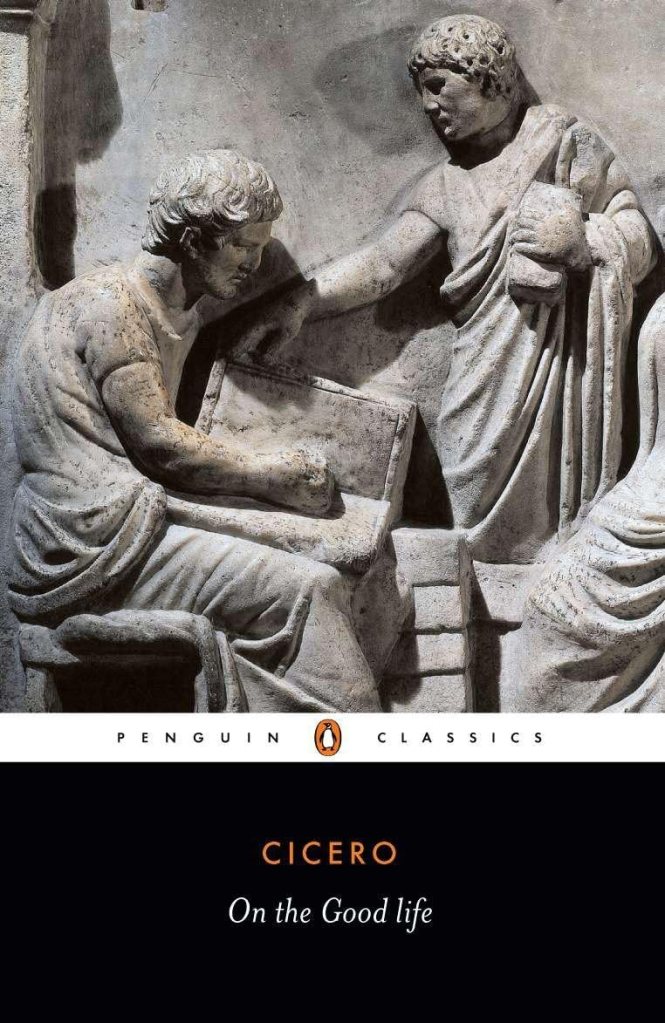
On the Good Life is a Penguin collection of Cicero’s ethical writings, translated for a modern audience by Michael Grant. Themes in these works include friendship, duty, virtue, happiness, and public service.
The questions presented in the text tend to be practical. How should one treat their friends? What duties and obligations does one have to their family and society? What is the character of a good statesman? How to virtue and happiness connect in everyday life? For a Roman like Cicero, these were not idle questions. They are subjects of reflection and practice, and his writings were often composed after personal losses and political disasters. The death of his daughter, Tullia, for example. If you want philosophy that’s informed by actual living, this is the book to have. So, if you think these guys were writing philosophical essays on the good life in a zen state, floating above it all, well… they weren’t.
One thing I find interesting about Cicero is that he was never trying to found a new school of philosophy. He was a lawyer and statesman first, and though his writings can tiptoe around Stoicism and Epicureanism, they feel less dogmatic. He compares different positions, and then it’s on you to determine which one seems the most persuasive. He is considered by academics to be eclectic and sceptical, in a positive way. I would see his works as being less like rigid philosophical treatises, and more like a conversation with the man at one of his country estates.
If you’re a modern day Stoic (and not a LARPing idiot), Cicero is a great author to dive into, partly because he makes for a brilliant intersection between Greek and Roman philosophy. He made many Greek texts accessible to the public, and in doing so, helped preserve some awesome philosophical ideas that might have been lost.
For the purists, On Moral Ends might do Cicero justice, but for an intro to the statesman, this Penguin collection is probably more approachable. And then, if you really want to explore his weighing of different philosophical schools, then other volumes will be more rewarding. Because in today’s world, where everything seems to be collapsing fast, there might be merit to asking oneself how to live well when circumstances are going from bad to worse.
 Lawrence Deveney