
“When we were children, we used to think that when we were grown-up we would no longer be vulnerable. But to grow up is to accept vulnerability… To be alive is to be vulnerable.”
-Madeleine L’Engle
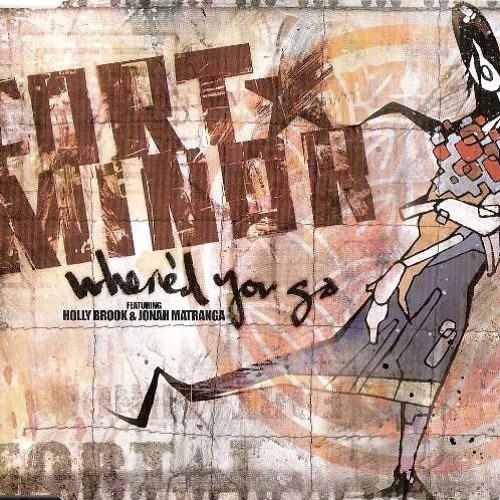
The fourth and final single from Fort Minor’s The Rising Tied was “Where’d You Go.” Featuring guest vocals from Skylar Grey (then known as Holly Brook) and Jonah Matranga, it was released on 14 April 2006, and quickly became one of the album’s best-known tracks. In fact, it was the album’s most commercially successful single, reaching number four on the Billboard Hot 100 and being certified platinum by the RIAA.
The Rising Tied is often described as alternative hip-hop, and “Where’d You Go” showcases the album’s diversity. “Petrified” and “Remember the Name” are all about bravado and making a statement. “Believe Me” is the catchy, melodic anthem. “Where’d You Go” is different as well. Driven by a piano-based hook, and a choir singing backing vocals throughout. Lyrically, producer and emcee Mike Shinoda sings from the perspective or a person whose partner is always away from home. Musicians on tour, professional athletes, troops serving overseas, or anyone kept from their homes by the demands of life and work.
“I wrote it for my wife, Anna,” Shinoda said while interviewing Grey for MTV News. “A lot of people do songs about being on the road, and I wanted to do this song about the opposite perspective. The people who are at home, your family, your friends, your loved ones who are at home.” More of a conversation than just an interview, one artist with another. I’d like to see more of those.
The single was a critical and commercial success, and the video really crystallises the song’s appeal. We see three different families — a boy with divorced parents, assuming more responsibility around the house; the wife of professional baseball pitcher Jason Bulger; and the parents of a soldier in Iraq. Shinoda performs the song in the homes of these families, with a note at the end of the video:
“‘Where’d You Go’ was filmed in the homes of three families who share the same sense of loneliness as this song. Thank you for sharing your homes and stories with us.”
It was definitely a single for the times. Post 9/11, there was a noticeable cultural shift, where the tone in mainstream music moved towards reflection and vulnerability. And with war in Iraq and Afghanistan dragging on for years and years, families would be separated for insane periods of time. People over there were being separated from their families, wondering if their children will even have a place to live, at best. Others found themselves with no families to return to. Here, there was a great divide between those who were gung-ho about the war in a haze of patriotic fervour, and those who protested in the streets, chanting “No blood for oil!”
And now it feels like that’s happening all over again, with the U.S. and Israel waging war against Iran. Personally, I’m dreading another twenty years of this. On and on it goes.
Given where things are going, maybe “Where’d You Go” could join the ranks of 2000s tracks currently enjoying a Gen Z revival? Back then, Shinoda and co. had simply crafted something with mass appeal — something that could be placed in rotation on the pop, alternative, and adult contemporary charts, and it managed to do so without alienating the core fanbase. It’s a prime candidate, for sure.
I say this even though I was never crazy about it. There are other tracks from The Rising Tied that I like so much more, and this one just seems permanently stuck in mid-2000s crossover territory. Which isn’t bad necessarily, but when it comes to timeless works from Shinoda, Linkin Park’s Hybrid Theory and Meteora are the only ones. But for many others, “Where’d You Go” really made a lasting impact. Good, I can appreciate that. You might be one of them, and if so, happy listening.
 Lawrence Deveney