
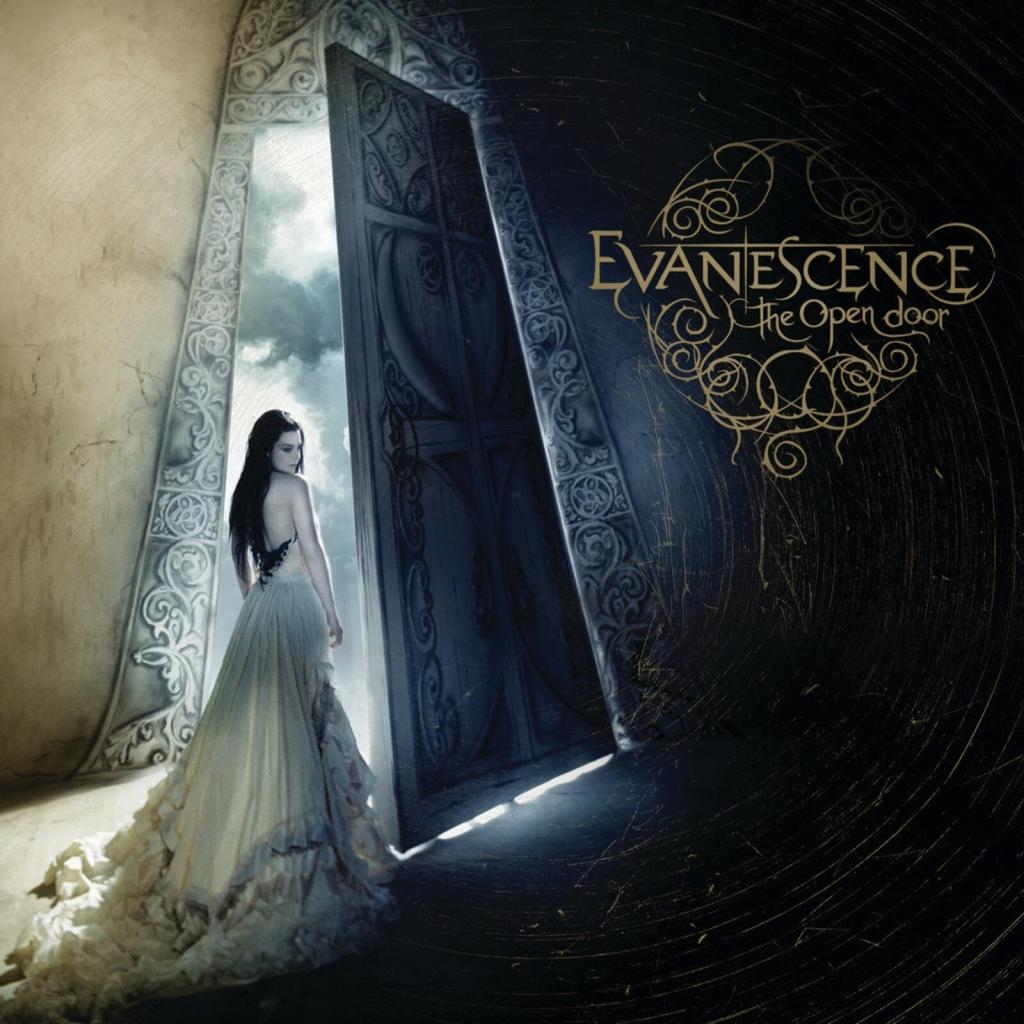
“Become who you are.”
-Nietzsche
If you’re one of the six or seven people reading this blog on the reg, you probably know that I’m a big fan of nu-metal bands. Korn, Deftones, Limp Bizkit, Linkin Park, Papa Roach, Disturbed on their good days, and so on. The time for all of that stuff was late nineties, and the very early 2000s. Korn’s Follow the Leader (1998), Issues (1999) and Untouchables (2002); Papa Roach’s Infest (2000); Limp Bizkit’s Chocolate Starfish and the Hot Dog Flavored Water (2000). These are the best of the best right there. Linkin Park’s Meteora (2003) was probably the last truly memorable release of that era. Actually, I’d say music in general peaked with Outkast’s monumental double-disc, 2003’s Speakerboxxx/The Love Below. It’s all been downhill from there.
Evanescence came into town at the tail end of the nu-metal era with the release of their 2003 debut, Fallen. It was one of the few albums that actually saw consistent commercial success, with hit singles like “Bring Me to Life,” “Going Under,” “My Immortal,” and “Everybody’s Fool.” Meanwhile many of their elder peers were seeing declining sales and/or moved in a completely different musical direction.
Personally, I wasn’t immediately blown away, but I became a fan when I heard their cover of Korn’s “Thoughtless” in late 2004. Not the latest I’ve come around for a band.
And then there was The Open Door, an album that proved my favourite subgenre still had some life left. Produced by Dave Fortman and released on 25 September 2006, it debuted at number one on the Billboard 200 chart, selling 447,000 copies in its first week. It topped the charts pretty much everywhere else in the world, including Australia. It was certified 2x platinum in the United States, and as of 2011, it has sold six-million copies worldwide. And that’s not factoring in streaming stats.
This was a nice progression in a highly successful career so far. Released in March of 2003, Fallen was a huge success, driven by the omnipresence of the aforementioned singles. The album sold ten-million copies in the U.S., and seventeen-million worldwide making it the sixth best-selling album of the twenty-first century. However, this era was also known for a great deal of interpersonal turmoil between the band’s co-founders, vocalist/pianist Amy Lee, and guitarist/de facto band leader Ben Moody. The two had problems for years, and the sudden pressures of fame only made things worse. The environment around the band — John LeCompt (guitar), Will Boyd (bass), and Rocky Gray (drums) — was temperamental and volatile, resulting in Moody’s departure in October of 2003. They recruited Terry Balsamo of Cold as a touring replacement, announcing him as a full-time member in January of 2004.
It was during this post-Ben phase of Fallen that Lee would start writing for the follow-up. Although, this wasn’t the easiest way to go about it. Lee admitted it was “impossible to write on tour and [writing is] the one thing I love more than anything else about my job.” Everyone seemed eager to return to the studio after touring, so that’s what they did. But the story behind The Open Door is vastly more interesting than one guitarist replacing another. The working relationship between Lee and Balsamo was what made the album.
With Fallen and Moody, Lee felt constrained in the writing process. Not so with Balsamo. Lee found him to be very encouraging, and in addition to his guitar work, he was the guy Lee bounced ideas off of, and collaborated with for most of the writing sessions. It made for a great musical exchange. Balsamo got Lee into Pantera, and Lee introduced Balsamo to a lot of her favourite music, like Björk and Mozart. With metal, classical, and a bunch of other sounds in mind, they set about writing. Of the album’s tracks, nine were composed with Balsamo. “All That I’m Living For” was written with LeCompt, while “Lithium,” “Like You,” and “Good Enough” were composed solely by Lee.
Whereas the existing members of Evanescence were relatively new to things, Balsamo was well-established in the nu-metal/post-grunge scene. After a brief run with Limp Bizkit, he joined Jacksonville grunge-revivalist band Cold. With Balsamo, they released two albums, 13 Ways to Bleed on Stage (2000), and Year of the Spider (2003). These two albums are generally considered to be Cold’s classics. They opened for Evanescence during the 2003 Nintendo Fusion tour, which is how Balsamo and Lee’s ensemble were introduced. Following lacklustre sales of Spider, Cold were dropped by their label. Vocalist Scooter Ward had checked into rehab around this time, putting his band’s future up in the air. With time on his hands and a need to continue working, Balsamo filled Moody’s vacancy in Evanescence.
Because I’m a guitar nerd, I need to talk gear. Balsamo used Ibanez guitars. Throughout his touring career, he was seen using RG2570, RG570, RG3120 models, and a few customs. He used Mesa Boogie Triple Rectifier heads and cabinets live and in the studio, a setup that’s very common in the nu-metal scene. He’s been quoted as saying he also used Diezel and Bogner amplifiers in the studio as well. For effects, he used a TC Electronic G-System. At the time, it was the most sophisticated multi-effects unit money could buy, and the quality of the reverbs and delays holds up even now.
[Aside: I owned a G-System for years, and it was Balsamo who inspired me. Even if you’re not a big effects guy, it’s great if you join a band where they already have a bunch of songs written, and there’s all these different effects in different parts of songs. Beats having a dozen or so stompboxes at your feet. Much as I love Korn, that was one area where I could never follow the leader.]
The Rectifier and G-System remained staples in Balsamo’s live rig up until his departure, though in his final days, his Ibanez models would take a back seat to a larger family of brands and models, including Gibson, PRS, and Charvel.
The Open Door was written over a span of eighteen months. Progress was slow, mainly because Lee wanted to make the best use of studio time and not rush production. The “sophomore slump” is a common occurrence in the music world. Bands have all the time in the world to write for their debut, then they hit the road and find they only have a few weeks to come up with material for the second. Korn’s Life Is Peachy is a perfect example of this. The success of Fallen probably gave Lee and co. enough leverage that they could take their time, and the label would allow it. No sophomore slump for Evanescence.
“I feel like I have the ability to do a lot of things I couldn’t do before, for a number of reasons,” Lee said in reference to the album’s title. “A lot of doors have kind of been opened in my life — not just since everything has happened for us.”
Balsamo’s contributions can be heard strongly on tracks like “Sweet Sacrifice,” “Weight of the World,” “Cloud Nine,” “Snow White Queen,” and “Lose Control.” With Cold, he and the guys would gather in a room, have some drinks and jam out song ideas. With Evanescence, things were more structured. Lee had a ton of ideas having to do with keyboards, loops, drums and melodies, and Balsamo’s task would be to come up with choruses and other parts.
“Lacrymosa” takes the Lacrimosa sequence of Mozart’s Requiem, Lee’s favourite piece of music. Incorporating backing beats, strings, a choir, and some heavy guitar work, it gives new meaning to the term “wall of sound.” If you’ve ever wanted to know how to make a classical piece sound like a contemporary rock song, this is an excellent example. “The Only One,” is another standout Balsamo track. It’s one of those songs that was never a single, but fans seem to swear by it. Lyrically detailing Lee’s past experiences with close-minded people and a feeling of not belonging,
Things seemed to be going well, but in October of 2005, Balsamo suffered a stroke, from a torn neck artery from headbanging too hard on stage. The left side of his body was paralysed. Doctors did not believe he would ever play guitar again, but he began physical therapy and retraining his hand to play, and was determined to overcome his paralysis. To say that this was the most difficult part of the recording sessions would be like saying that water is wet, but yes, it was the most difficult part of the sessions.
Imagine that, a stroke from rocking out too hard. That’s metal… I suppose.
Extra time was given for Balsamo to recover. While the band could have gone ahead and hired another guitar player, Lee insisted that they not do this, and fully believed her songwriting partner would get better. Balsamo wasn’t fully recovered, so he and LeCompt worked out who would play what as tour rehearsals began.
“I’m like at enough where I can get by on tour,” he said. “Basically this tour is like therapy right now for me. I’m hoping it will get better.”
Talk about determination. To be a musician and not be able to use your hand would be a threat not only to your job, but your identity. It’s amazing Balsamo was able to learn to play again the way he did. It’s like a maximalist interpretation of this passage from the Meditations:
“At dawn, when you have trouble getting out of bed, tell yourself: ‘I have to go to work — as a human being. What do I have to complain of, if I’m going to do what I was born for — the things I was brought into the world to do? Or is this what I was created for? To huddle under the blankets and stay warm?
–But it’s nicer here…
So you were born to feel ‘nice’? Instead of doing things and experiencing them? Don’t you see the plants, the birds, the ants and spiders and bees going about their individual tasks, putting the world in order, as best they can? And you’re not willing to do your job as a human being? Why aren’t you running to do what your nature demands?
–But we have to sleep sometime…
Agreed. But nature set a limit on that — as it did on eating and drinking. And you’re over the limit. You’ve had more than enough of that. But not of working. There you’re still below your quota. You don’t love yourself enough. Or you’d love your nature too, and what it demands of you. People who love what they do wear themselves down doing it, they even forget to wash or eat. Do you have less respect for your own nature than the engraver does for engraving, the dancer for dance, the miser for money or the social climber for status? When they’re really possessed by what they do, they’d rather stop eating and sleeping than give up practicing their arts.”
I don’t think Balsamo was trying to make a philosophical statement, but there is something very Stoic about his rehabilitation and drive to move forward.
After the album was completed, and three months before its release, the band announced the departure of Boyd. He “couldn’t go through with another huge tour,” Lee said in a statement. Bearing no ill-will, the bassist simply packed up his gear and returned home to his family in Little Rock, Arkansas. He was replaced by Tim McCord, former guitarist of the Revolution Smile. It’s funny — originally, McCord switched instruments to play bass for Evanescence, but in 2022 he switched back and now he plays guitar for them.
The Open Door was released, and was a number one hit. The lead single was “Call Me When You’re Sober,” a pretty damning track inspired by her breakup with Seether frontman Shaun Morgan.
“It’s very obvious who it’s about,” Lee said. “I know that people would read between the lines and think it’s about my ex-boyfriend Shaun Morgan [of Seether], but I wanted to be completely clear. I needed so bad to say exactly what I was feeling for so long. Music is therapy for me. It’s my outlet for every negative thing I’ve ever been through. It lets me turn something bad into something beautiful.”
It’s one of their most famous tracks, dubbed a “chick anthem” by Lee, and it has been a staple in the band’s live set ever since. Balsamo plays an Ibanez RG with Michael Myers artwork on the body for this track, which is in Drop D. Very cool.
The second single was “Lithium.” Lee originally composed the chorus when she was sixteen, but never used it until this album. Describing the song’s theme as “happiness from a negative point of view,” the word “lithium” refers to the numbness of overmedicating oneself. This song is in Drop A# tuning. Personally, I find my favourite Evanescence songs tend to be the ones in this tuning, including “Cloud Nine” and “All That I’m Living For,” and about half of the band’s 2011 self-titled album. Lee’s voice and the band just work wonders with it, for whatever reason.
“I get into these moods where I write music,” Lee elaborated in an interview. “It’s not about so much about being depressed, it’s just the strange low that I ride. But at the same time I want to be free and break through and be happy. I think that was kind of me, getting ready to play [and saying], ‘That’s it, drop the ball and just change and move on.'”
The third single was “Sweet Sacrifice.” The album’s opening track, it’s played in Drop C# with a more aggressive riff than anything found on Fallen. The chorus is huge and melodic, with an almost industrial edge to it. Lyrically, it deals with moving on from a toxic relationship.
“It’s the one song on The Open Door that’s about the same abusive relationship which was the source of all the songs on Fallen,” she explained. “It was appropriate to put this song at the beginning, but it comes from a much stronger standpoint than Fallen. It’s not saying, ‘I’m trapped in fear and somebody save me.’ It’s saying, ‘Fear is only in our minds … I’m not afraid anymore’.”
Touring for The Open Door began in Toronto, Ontario, and spanned North America and Europe for the remainder of the year. 2007 saw the band go pretty much all over the world. Japan and Australia, another leg of North American dates. They did all the big festivals in Europe and South America too. Evanescence were bound and determined; not even a stroke could stop them from taking over the world.
However, it would be remiss not to dedicate a section of an Evanescence essay to the band’s line-up changes and the drama that always seems to accompany them. In May of 2007, LeCompt announced on his blog that he had been fired from the band. His statement:
“Around 3:30 pm yesterday I received a call on my cell from Amy,” he wrote. “This call wasn’t from a friend who appreciated me but from an enemy who was prepared to hurt me and my family. Without any warning or negotiotiations for my future, I was fired for no good reason. We have not always seen eye to eye on everything, but who does? Our common goal was always the same. To make Evanescence the best rock band it could ever be. I have always given blood, sweat and tears to make that happen but apparently that is not enough. I have now become just another of the people fallen by the wayside on the revolving door of her life.”
He refers to the departure of Moody in October of 2003, which was messy.
“It’s funny how many of us there are now,” he continued. “I guess it’s good for lyrical content, though. Maybe I will be among the blessed to have a song written about me, too. Maybe the song will be ‘Call Me When You’re Broke’.”
Following this, Gray departed, citing a sort of gag order imposed by management.
“Amy Lee’s management emailed me last night to tell me that, in their view, the contract I signed to record, perform and tour with the group says I’m not allowed to have any free speech in regard to Evanescence,” Gray wrote on his blog. “The way they spin it, I’m not even allowed to say I quit the group, I guess. But the news is out there, so, there ya’ go. I need to have a lawyer read over all that mess to tell me what, when and how I can tell you all — the REAL FANS — what really went down, if I ever can, haha.”
Former Evanescence keyboardist David Hodges responded to LeCompt and Gray on the forum for his band Trading Yesterday, basically calling the two ungrateful pricks.
“Amy and Ben started Evanescence,” he said. “The three of us got signed and four of us (I tip my hat to the great Dave Fortman) made the record that it seems many of you love. No one else. What the hired band did do was accept the chance of a lifetime — be part of one of the biggest-selling records in the last 10 years and make more money playing in front of bigger crowds than any other musician we’d known. Are there sacrifices? Sure, life is full of sacrifice; if someone wanted to leave to be with their family, then that’s understandable. But for anyone to be even the least bit ungrateful is mind-boggling. What exactly did they think they deserved out of this? Amy doesn’t owe them anything, and anyone who thinks differently is sorely mistaken.”
The hired band being LeCompt, Gray, and Boyd.
After Fallen was recorded, they were hired as touring musicians. When it came time to write and record The Open Door, it was established that Lee and Balsamo were the principal songwriters, while the remaining bandmembers would play out their allotted parts. Boyd seemed content with this arrangement, probably anticipating his quiet departure and return home. LeCompt and Gray, on the other hand, felt like they were being pushed out of a band they helped create. This contributed to their dissatisfaction in the band, and their working relationship with Lee just went downhill from there.
Lee responded as well, saying that even though they were hired as touring members, they were treated as if they were full-time, appearing in music videos, photo shoots, and other promotional media. There was also an attempt to bring them into the writing process, but they were ultimately disinterested in the material, prioritising work with their other bands Machina and Soul Embraced while basically staying in Evanescence for the money. She added that she “knowingly let this negative energy grow within my band for a very long time because I was afraid of the appearance of falling apart when in reality trying to hold on to these guys is what was holding us back.”
I may as well go through LeCompt’s gear as well. He used a bunch ESP LTD guitars, including a few EC-1000 models, which is ESP’s take on the singlecut body shape. He had at least three, in black, red, and tobacco sunburst finishes. The first two had EMG active pickups, while the sunburst one had Seymour Duncan passive pickups. He also had a few Viper models, most notably James Hetfield’s limited edition signature baritone, the Grynch. There were other models in his live rig — F-300FM, H-301 and H-307 — from the Fallen era up until his 2007 departure, but the EC-1000 and Viper were the main ones. Evanescence play in several different tunings, so it’s common for the guitarists to have something like ten of the same brand in their arsenal.
For amplification, LeCompt used the Mesa Boogie Stiletto Deuce. Something of a curiosity in Mesa’s history, the Stiletto was their attempt at recreating the hot-rodded Marshall amps of the eighties, albeit in a modern Mesa chassis. Some players loved it, but most were kinda left scratching their heads. It wasn’t sufficiently “Mesa” for existing Mesa customers, who knew and loved the Rectifiers. And while the hot-rodded Marshall thing might have been a great idea on paper, Mesa were competing with other brands who were far more established in doing the thing they were attempting. Orange and Blackstar being just two.
[Another aside: I’m really tempted to write a piece on the Stiletto series now, because it is far better than its reputation. I had a friend who used one years ago. He played an Ibanez K7 through it. It might seem like an odd choice for Korn- and Limp Bizkit-style tones, but with the right setup, they can deliver a sound that’s warm but still uncompromisingly heavy. It sits closer to the almost percussive, rhythmic sound commonly associated with nu-metal bands than most expect. He used a BOSS SD-1 Super Overdrive and an Electro-Harmonix Big Muff Pi with it as well, making for one of the more unique setups in modern metal.]
And for effects, LeCompt used a G-System as well. I’m not sure who decided to bring these into the band — LeCompt or Balsamo — but I guess it doesn’t matter. Great effects, and they were a no-brainer for touring musicians at the time.
I saw Evanescence in Melbourne in February of 2007, and LeCompt and Gray’s playing was… mostly fine. They played their parts, though fans in general are critical of LeCompt’s approach to live guitar playing. Whenever he played one of Moody’s solos, it would always be note-for-note, never improvising or playing with any sense of spontaneity. I noticed this too. This does not make him a bad musician by any means, but how can I put it… it’s a bit like a teacher who just goes through the same textbook exercises every lesson. You want to vary things to keep the students engaged. That’s how I’d put it.
Of course, there was a whole lot of conjecture surrounding their departure (still is). People say LeCompt didn’t really care about Evanescence at all, that he was only in it for the money, that he made fun of Lee’s lyrics. Maybe there was a bit of “Team Moody” back and forth happening behind the scenes. I’m sure it was complicated, and the words of a few Redditors aren’t really enough to go on, even if they were OG fans on the EvBoards back in the day. As for Gray, he and LeCompt were basically a package deal. LeCompt was fired, Gray basically said “fuck you” and quit. That’s my guess anyway.
“When you wake up in the morning, tell yourself: the people I deal with today will be meddling, ungrateful, arrogant, dishonest, jealous and surly,” Marcus Aurelius once said. “They are like this because they can’t tell good from evil. But I have seen the beauty of good, and the ugliness of evil, and have recognised that the wrongdoer has a nature related to my own — not of the same blood and birth, but the same mind, and possessing a share of the divine. And so none of them can hurt me. No one can implicate me in ugliness. Nor can I feel angry at my relative, or hate him. We were born to work together like feet, hands and eyes, like the two rows of teeth, upper and lower. To obstruct each other is unnatural. To feel anger at someone, to turn your back on him: these are unnatural.”
What else can one do? Once those negative people and influences are exorcised from one’s life, the only thing that’s left is to keep going.
[Another another aside: I might be biased towards Lee and the remaining members, but I hate “Team [so and so]” tribalism. There are posts on social media from fans who have met LeCompt or Gray, and thought they were the nicest guys ever. Great. If you like their stuff, support them.]
Soon after the two departed, former Dark New Day guitarist Troy McLawhorn and drummer Will Hunt were brought in as replacements. The revamped line-up instantly meshed, and the band’s European tour went off without a hitch (McLawhorn has a real nice collection of Gibson and PRS guitars, though I’ll save that for another day). After that, they co-headlined Korn’s Family Values Tour 2007, with Hellyeah, Atreyu, Trivium, and Flyleaf as openers on the main stage.
Evanescence saw out 2007 with another headlining tour of North America, and after that, they took a well-earned break, with Lee in particular using this time to collect herself and live life away from the industry.
The final single from The Open Door was “Good Enough.” Released in December of 2007, it’s a nice piano ballad featuring a strings section. The album’s closing track, and composed entirely by Lee, it represented a new beginning and ended the album on a hopeful note. There was a lot of angst going into The Open Door, so to be able to write something like this must have been such a relief.
“I had gone through a lot of difficult things during the writing of the whole album, and by the end of it, I had stepped away from those bad situations,” Lee said of the track. “That’s really hard. You have to be really brave and strong about it. After doing that, I felt so amazing. For the first time I felt like I could write a song based on how good I felt.”
For anyone wondering, leaving Evanescence was not the end of LeCompt and Gray. In 2009, they reunited with Moody and formed We Are the Fallen, along with bassist Marty O’Brien and vocalist Carly Smithson. In 2010, they released their debut album, Tear the World Down, but as of January 2011, they have been inactive. LeCompt and Gray seem to have lived comfortably working on various projects throughout the years, and their departure was nowhere near the level of drama as Moody’s, so good for them.
By October of 2011, The Open Door had sold six-million copies worldwide. Not as huge as Fallen, but still a success for the band. It would have been so easy just to make Fallen II, but they didn’t, and Balsamo’s contributions to the band went way beyond just heavy guitar. He was Lee’s songwriting partner, a consummate professional who could translate her song ideas into everything they were meant to be, without constantly negating everything. A lot had happened too — bandmembers coming and going, medical emergencies, circumstances changing. These things happened, but the album was entirely what they made of it. Awesome.

