
“Out of these inefficient tinkerings will come the future.”
-Kevin Kelly
[Note: To the ten or so people who read this blog on the reg, I’m focusing on albums when I write about music from now on. No more individual songs. Nine Inch Nails’ “Every Day is Exactly the Same” and Disturbed’s “Land of Confusion” ruined me on the whole thing. Blame them.]
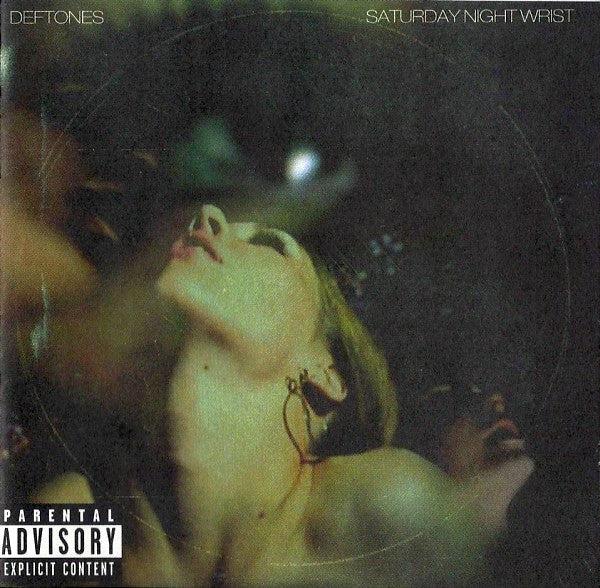
One of the most fascinating albums of the 2000s is Saturday Night Wrist, by the Deftones. Released in October of 2006, it was the band’s fifth album. Bob Ezrin (Pink Floyd, Alice Cooper) did production. It was also their last with Chi Cheng on bass, prior to a serious car accident that left him hospitalised in 2008 (he remained in a comatose state before dying from cardiac arrest in 2013).
It’s also an album that people slept on for years before Gen Z found it and launched it into the stratosphere, so it needs an article.
The production history is pretty wild, one of the band’s most dysfunctional periods. They spent years trying to put it together, with multiple studios, abandoned material, disagreements about the producer, disagreements within the band, frontman Chino Moreno’s lack of focus and struggle to finish his vocals, and the band — Stephen Carpenter (guitar), Chi Cheng (bass), Abe Cunningham (drums), and Frank Delgado (DJ) — generally not communicating as a group. Drugs, partying, infighting, and all manner of rock and roll cliches had taken hold.
Cunningham described this period as horrendous, even stating that the band members didn’t like each other at this point.
“It was not fun at all, and not pleasant,” he said in an interview with AOL Music. “It was horrendous. It made me very sad.”
And yet, all of this made for an incredible album, their most atmospheric, alien, melodic, and most emotionally exposed at that point. All that drama and chaos made the album.
Writing and recording began in early 2004. At that point, they’d been touring for their 2003 self-titled album, which wasn’t the success the band and label had hoped for. For many, Adrenaline (1995), Around the Fur (1997), and White Pony (2000) were their classics. Things kind of hit the wall with their self-titled effort. Ideas for a new album began to take shape in the band’s studio in Sacramento, California. In April of 2004, they announced that they were relocating to the Morning View house in Malibu (the house where Incubus did their album of the same name). This was when the search for a producer began.
After four albums together, the band dispensed with the services of Terry Date (Pantera, White Zombie, Limp Bizkit), and decided they wanted to look elsewhere for input. They had a few choices. Ken Andrews (Failure) and Rick Ocasek (the Cars) were considered, but nothing came of either. Dan the Automator was brought in, and he lasted for about a week. He focused on particular aspects of their sound, and after some discussion, the band opted to work with Bob Ezrin, as well as engineer Brian Virtue.
With Date, the band had spent years developing their sound. Stephen Carpenter’s use of seven-string guitars and just generally being a giant metalhead; Moreno’s atmospheric vocals and love of the Cure and Depeche Mode; alternative and shoegaze influences; Delgado’s use of sampling and integration of subtle sounds before conventional turntablism or beat-juggling. They had their way of writing and recording, which worked with Date. However, Ezrin came in with very different ideas about how things should be. Problems arose very early on.
“It felt like we had no control because the label wanted to approve each song. I’ve never had to do that before. It wasn’t creative,” Moreno said. “I also think I expected a lot more from Bob than I got. I thought he would be my partner and we’d have tons of ideas together. It just didn’t really happen that way.”
The band’s label Maverick, and Ezrin, wanted songs to be very structured. Moreno simply didn’t work that way. The bandmembers would continue to record their parts, while he jumped ship to focus on a different project, Team Sleep and their 2005 debut album. Ezrin and Maverick’s approach to recording created friction between them and Moreno, but Moreno shifting his attention to his other band while recording with the Deftones created friction with his bandmates. Not good for the Deftones as a group in that moment, but on an individual level, Moreno found it to be positive. He was dealing with addictions to drugs and alcohol, as well as the dissolution of his marriage. Team Sleep was a welcome distraction from it all.
In the meantime, the band released a compilation album, B-Sides & Rarities. The CD was a collection of covers, remixes, acoustic versions, and other such material, while the DVD contained all the band’s music videos and other content. It also included a cover of the Cocteau Twins’ “Wax and Wane,” which was an earlier product of the Ezrin/Virtue sessions.
In early 2006, the band and Moreno reconvened. A solution to the Moreno/Ezrin problem was found in the form of Shaun Lopez. Lopez was a founding member and guitarist of post-hardcore band Far, and fronted the Revolution Smile. He’s a longtime friend of the Deftones, and at this point in time, he was taking a break from playing in bands to focus on production. He handled Moreno, while Ezrin would helm the rest of the album. They got the best of both worlds — Ezrin could get the band to focus, focus, focus, while Lopez would collaborate with Moreno to get his more organic, atmospheric vocal sound.
Previous Deftones albums sounded nothing like the nu-metal bands of their era. Saturday Night Wrist sounded completely different from those albums. It was like they’d skipped a few steps in growing up.
The first major difference I noticed was Carpenter’s guitar-playing, probably because I’m a guitar nerd. He plays seven- and eight-string guitars made by ESP, tuned nice and low. He’s had a few signature models over the years. He figures the instrument in a way that combines dissonance, sustained notes, octave figures, different chord voicings, and riffs that leave room instead of just filling every second with walls of gain. Tracks like “Rapture,” “Rats! Rats! Rats!” and “Combat” were pummelling in every sense of the word metal, while others would showcase the more overt dream-pop/shoegaze influence.
“Hole in the Earth” was chosen as the album’s opening track and lead single. It begins with this shoegaze-like guitar atmosphere, before launching into the main riff that is as heavy as it is restrained. Nothing overly complicated or technical, just texture and emotional space. The right things at the right times.
“Mein” was the album’s second single, a sort of crossover hit featuring System of a Down vocalist Serj Tankian. Nice to see those worlds collide. “Beware” is a track that keeps building and building. In the what-the-fuck file is “Pink Cellphone,” featuring Annie Harding of Giant Drag (another band Lopez was producing at the time). Her contribution is a spoken-word piece that’s hilariously not safe for work. Plus she sounds like she’s talking… on the phone. How fitting. “U, U, D, D, L, R, L, R, A, B Select Start,” also known as the “Konami code,” is a cool instrumental that sounds like an alt-metal dream.
Every bandmember makes their presence known. Delgado’s electronics have always been an integral part of the band, going far beyond the occasional scratching. Cunningham locks everything together perfectly on the drums. Cheng’s bass sound is incredible. Listen carefully, and you hear a kind of squaring-off between him and Carpenter. In one interview, he explained his method of countering the guitars instead of just following them, and on this record, he and Cunningham combined forces for something that went beyond just the requisite low-end.
“When the song is melodic and there’s room to breathe, I like to fill up the space with cool, classy lines,” he explained in an interview with Guitar World. “I’ve always appreciated bassists who bring a lot to the table, like Steve Harris of Iron Maiden, Cliff Burton with Metallica, or Matt Freeman with Rancid. And I play really hard with my right hand.”
If only he knew how many players cite him as an influence now.
“I used to think I was the cool drunken punk-rock bass player, but I cleaned up on Saturday Night Wrist,” he added. “I paid close attention to the kick, snare, and hi-hat. This is the first album where Abe and I really locked.”
The title of the album is kind of funny. The story is, according to Cheng at least, when people get past a certain stage of drunkenness, they fall asleep with their hand in this weird position. They wake up, and it’s paralysed. Usually on a Saturday night. There you go.
With the album more or less done, it was time to tour. First there was the Taste of Chaos tour with Thrice and Atreyu, just after vocal mixing in the studio. After that, the Deftones’ friendship with Korn was rekindled with the two bands co-headlining the Family Values Tour 2006, with Stone Sour, Flyleaf and Dir En Grey rounding out the main stage. Not only did this mark the first instalment of the tour to feature co-headliners, it was a reunion of friends who used to play club shows together, before either act took off.
For fans of both bands, this was something special. Family Values was a concert tour started by Korn in 1998. Opening bands were a selection of headline-worthy acts that appealed to fans of the burgeoning nu-metal scene (Limp Bizkit, Linkin Park, Staind, et al). For years, the Deftones declined to join this camp, as they wanted to carve their own path in the music world, and not just be like whatever was happening. Maybe this cost them commercial exposure, but they held firm, making music and touring their way. Moreno in particular resented the constant comparisons, but after all that hype started to fade and each band settled into a post-fame era, he loosened the reigns a little.
“We’ve had a crazy relationship because we’ve always distanced ourselves from Korn so we could be our own band,” he said. “Their first record came out before ours, so it was always like we were following in their footsteps. And I think we had to do that, and now it’s time to just have fun. We don’t care so much about that stuff anymore. We just want to play with friends.”
This tour cycle started months before the album was released, but it was a great opportunity to debut new material, and just play to their fans again after being gone for a while. As to whether leaked tracks would be an issue, the band didn’t seemed too concerned. The bigger challenge was making a set with so much material to choose from.
“In the past, it was always a concern that the songs would leak or whatever, but you can’t concern yourself with that anymore,” Cunningham said to MTV News. “We’re very excited to go and rock this stuff. But we’ve only got an hour set, so we’re trying to fit four or five records into an hour. That’s going to be difficult, but we’re hoping for at least two new songs in each set. We’ve been voting on that, too.”
The album was released on 31 October 2006, debuting at number ten on the Billboard 200 albums chart with just over 76,000 copies sold in its first week. Nothing to scoff at, but it didn’t make the same impact as self-titled or White Pony, which debuted with 167,000 and 178,000 copies in their first weeks respectively. But that didn’t matter. This was a band that survived enough battles and knew they had their dedicated audience. With that, they spent most of 2006 and 2007 touring, reaching not just the U.S. and Europe, but South America, Japan, and Australia. Here, they did the Soundwave festival, which hadn’t expanded to Melbourne just yet but was starting to grow.
Album sales were low, but people still turned out to see the Deftones live. It calls to mind former Wired editor Kevin Kelly’s “1,000 True Fans” principle. That is, one does not need millions of fans to be successful, but a smaller number of diehards who will support what you do. This is true of many online creators today.
“1,000 true fans is an alternative path to success other than stardom,” he wrote on his blog. “Instead of trying to reach the narrow and unlikely peaks of platinum bestseller hits, blockbusters, and celebrity status, you can aim for direct connection with a thousand true fans.”
The Deftones had a lot more than just one-thousand fans — Adrenaline and White Pony both had platinum status — but the point still stands: dedicated audience that never dies.
“Art is the kind of marathon where you cross the finish line and instead of getting a medal placed around your neck, the volunteers roughly grab you by the shoulders and walk you over to the starting line of another marathon,” Ryan Holiday wrote in Perennial Seller, a severely underrated business book about work that lasts as opposed to simply going viral. The Deftones never quite reached the lofty heights of stardom enjoyed by Limp Bizkit or Linkin Park, but they have earned respect and longevity with how hard they’ve worked.
And the work has started to pay off. To say that the Deftones have enjoyed something of a modern day revival would be an understatement. They have blown up. And not just with a cult following of a few scattered fans, either. Saturday Night Wrist in particular has become a favourite of Generation Z.
This is where “Cherry Waves” comes in.
“Cherry Waves” is listed as one of the Deftones’ most streamed tracks on all the major services (515 million streams on Spotify, at time of writing). I love that this is happening, because it’s my favourites from the album, and probably one of my favourite Deftones songs ever. It was never released a single, but it should have been. If you bought the CD back in the day, you would have seen the “featuring ‘Hole in the Earth’ and ‘Cherry Waves'” sticker on the cover. Alternative Press described it as “drenched in groove, layered with distorted and daydreamy guitar tones alongside Moreno’s passionate cries.”
“This is a story about being in the middle of the ocean with someone saying, ‘If you were to sink underneath the waves, then I’d swim after you,” Moreno said of the song’s meaning. “Would you do the same for me? It’s seeing how far the trust goes.”
One thing that has always set the Deftones apart from their supposed peers is Moreno’s use of imagery and storytelling in his lyrics, keeping things deliberately vague (unless he goes out of his way to explain it in an interview). And people have described “Cherry Waves” in many ways — dreamy, atmospheric, melancholic, sensual, angsty, et cetera. It just goes to show, a band can be intense without having to be heavier than everyone else. And, it shows how silly it is trying to put a label on them or their music.
In 2022, “Cherry Waves” started to appear on TikTok, followed by “Change (In the House of Flies).” Suddenly, 750,000 videos tagged #Deftones had gathered almost nine-billion views, mostly from creators aged twelve to eighteen. Streaming numbers jumped, with Spotify listens being up 520 percent since 2022, according to 032c magazine. PopMatters mentioned one TikTok video, featuring a ballerina dancing. as being one of the more famous uses of the song.
But why this particular song? To start with, it really is the album in a nutshell. The soft, creeping manner of the track represents the themes of love, trust, and the uncertainty of it all, better than the hardest-hitting, purely riff-based numbers. Consider just the opening lyrics of love and trust in the first verse:
“A sea of waves we hug the same plank,
Just as I’d rehearsed over in my brain…”
And then everything else surrounding it, everything in its place. Cheng’s basslines are his best (in my opinion). Cunningham suggests — as opposed to announcing — his presence on the drums.The guitars do ramp up for the chorus, but they’re juxtaposed with some of the best vocal melodies from Moreno. The shoegaze and dream pop influences make for a perfect storm of music that is right in Gen Z’s wheelhouse. The second verse:
“You hang the anchors over my neck,
I liked it at first but the more you laughed,
The crazier I came…”
This one is reinforced by Cunningham finally shifting gears to a fuller drum sound, anchoring the atmosphere with the perfect beat.
That plank they’re hugging in that sea, the trust that Moreno refers to, and the fear of losing it, whether between himself and his ex-wife, or between himself and his bandmates. The track was well-received by fans back in the 2000s, but nothing quite like today.
Look at the song, and the world we live in. Rising inflation, home deposits and rent prices, mental health and burnout, climate anxiety and all manner of global crises. This is not even factoring in social media and being terminally online. Things have changed, not necessarily for the better, and while things might not literally be unattainable, it does seem like the odds are stacked against the current generation. Dare I say it’s like being in that sea, hugging that plank. I don’t want to try and speak for a generation I don’t belong to, but I wouldn’t blame anyone for wanting an escape, or connecting with a song like “Cherry Waves” in such a way.
Social media virality of a song doesn’t necessarily mean a band will have earned more longtime fans, but this revival of interest in the Deftones has seen the band appeal to a new generation. This surge in popularity has helped drive some massive concert tours. It used to be that the Deftones would generally play concert halls like the Forum or Festival Hall. Which was cool, but now they’re headlining arenas (like it should have been all along).
And nobody has been more surprised than the bandmembers themselves.
“Not in a million years would we have thought TikTok would help expose new people to our ancient tunes,” Cunningham said in an interview with Kerrang! “Now, that being said, we never went anywhere either. We’ve been putting out fucking solid records for this whole time! But seeing the crowd the past few years, there are some really, really young people out there.”
Quite amazing. “Cherry Waves” has became quintessential Deftones for a generation, along with “Hole in the Earth” and, to a lesser extent, other album tracks. It’s also a victory lap for people who found it back in 2006, and have held onto it for two decades.
For me, nothing exemplified this quite like seeing the Deftones live in Melbourne in May of this year (shoutout to my homies Nick and Mark). It was an awesome arena show, and the set was a perfect mix of classics and new album tracks. For the encore, countless phone lights swirled in the stands, as the band launched into “Cherry Waves.” And then, “My Own Summer (Shove It)” and “7 Words.” For that track to sit alongside these two classics says it all. There are videos of it on YouTube, but they don’t quite capture the richness of the experience. But anyone who has seen one of their favourite bands live knows that.
This wasn’t nostalgia for millennial dadderinos trying to introduce ThE nInEtIeS to their disinterested offspring. No, this was a moment for fans across generations, both the longtime listeners, and the youth that have given the band new life. To me, that is far more impactful.
The Deftones have shown one thing consistently throughout the years — you don’t have to play as hard as you can to be intense. Saturday Night Wrist might have been slept on for a long time, but watching the younger generations pick it up and run with it has really been something to behold. A beautiful, atmospheric body of work that was overlooked by many on its release is now the soundtrack to those experiencing an overwhelmingly online, fragmented cultural environment.
That’s quite a legacy, and I hope the album remains a classic for years to come. Rock and roll.

