
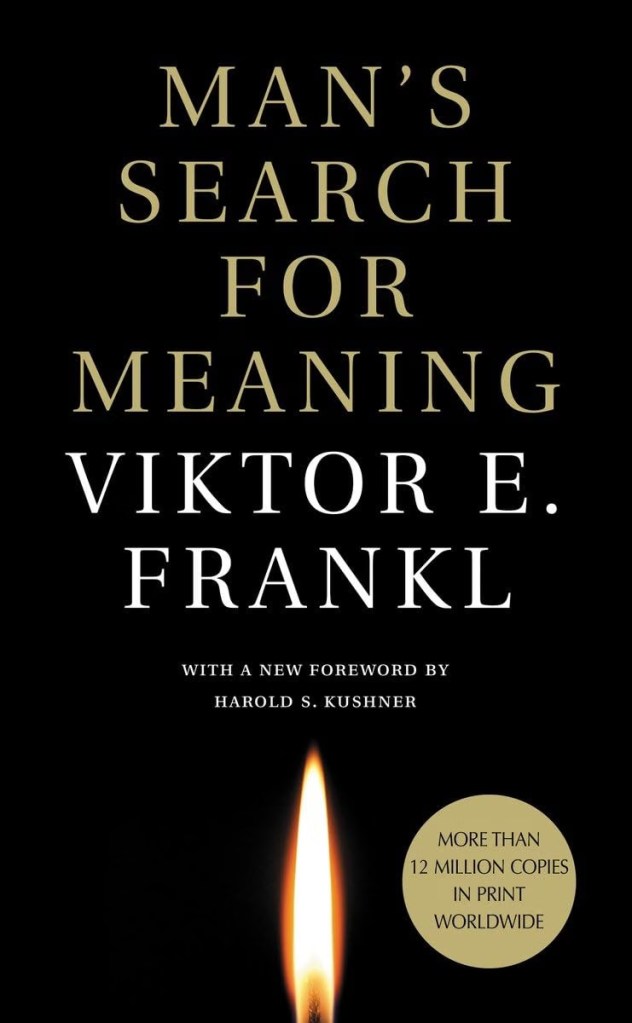
There is a reason this book has sold tens of millions of copies worldwide. Man’s Search for Meaning is a foundational text on resilience, purpose, and Stoic-like endurance, derived from Viktor Frankl‘s time in Nazi concentration camps, and his experience as a neurologist.
Frankl founded logotherapy — a therapeutic model based on a human sense of meaning, rather than pleasure or power. Frankl was a Holocaust survivor, and he managed to find a way to see it as the ultimate metaphor for life — we have little or no control over our circumstances, but we can control our attitude, and ability to find meaning in what happens. The principles discussed in Man’s Search for Meaning helped him survive, and we are fortunate that he managed to turn all of this into one of the greatest books of all time. He takes the timeless question, “What is the meaning of life?” and turns it on its head. For Frankl, we must recognise that life is asking us that question, and we answer through our daily actions, choices, and responsibilities.
There is so much throughout the text that can resonate with you, but one thing really stood out to me, based on Frankl’s time spent in concentration camps: that everything can be taken from a person except the ability to choose their attitude in a given set of circumstances. That is, you can keep Frankl in the camp, and he will not enjoy it by any means, but it will not break him. His mind, his values, these are the things you cannot take.
One can’t help but make connections between logotherapy and the psychology of survival with Stoic philosophy. Teaching resilience by focusing on a “why” to live for, learning to love, finding meaning in suffering… nothing abstract here, just philosophy for living.
I would recommend Man’s Search for Meaning to just about anyone, but those exploring Stoicism would do well to make it their next stop. Suppose you’re working your way through the Discourses of Epictetus, the Meditations of Marcus Aurelius, Seneca’s Letters from a Stoic. Next might be Montaigne, and then Frankl. Really, the entire compendium of his work is incredible, especially his collection of public lectures, Yes to Life: In Spite of Everything.

